Cash supply
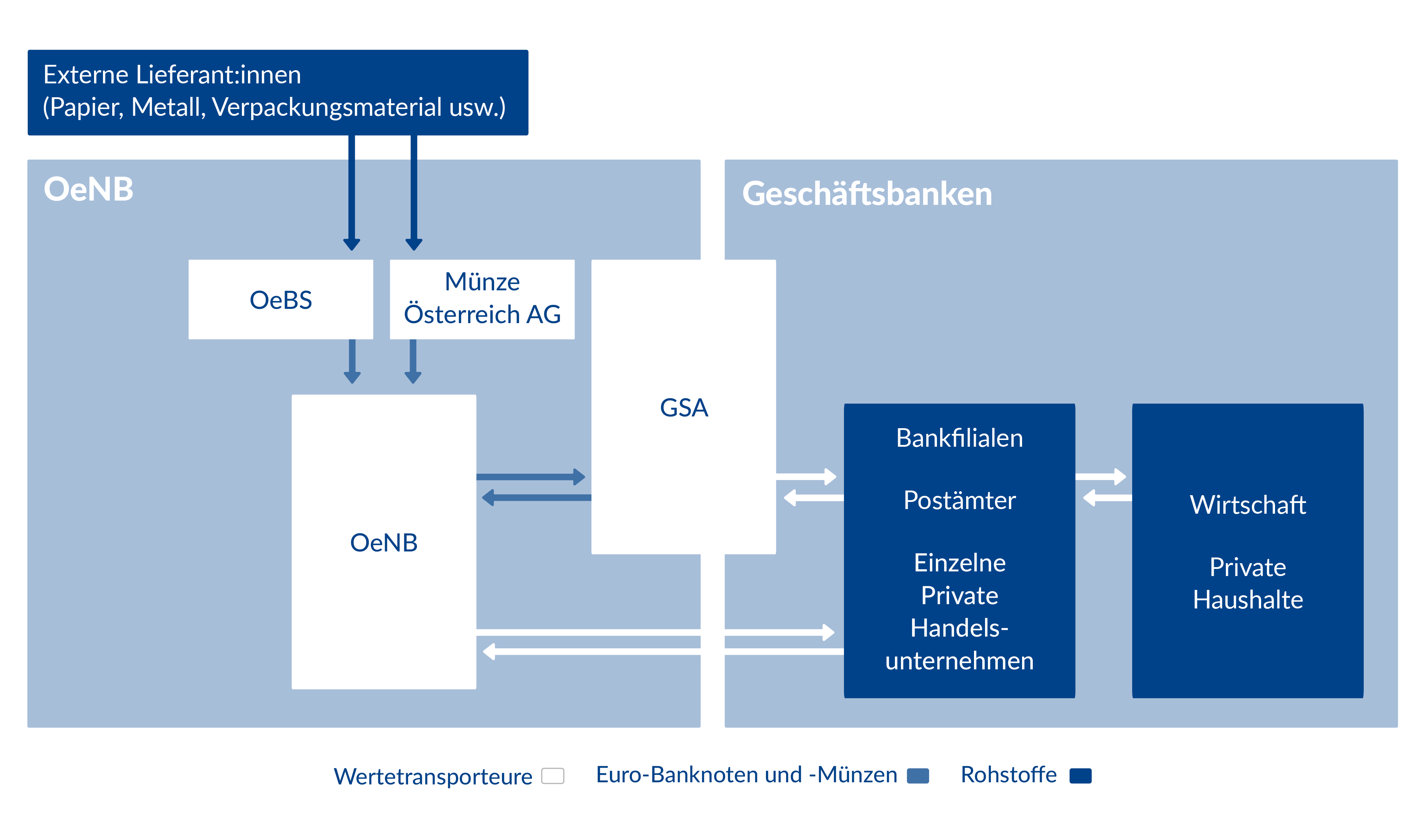
The OeNB makes sure that Austria has a secure and reliable supply of cash at all times. It keeps an eye on banknotes from the moment they are produced right through to when they are withdrawn from ATMs.
OeNB ATMs close gaps in cash supply
Ensuring an adequate supply of cash and easy access to cash are key objectives of the OeNB. Closing gaps in cash supply is therefore one of our priorities.
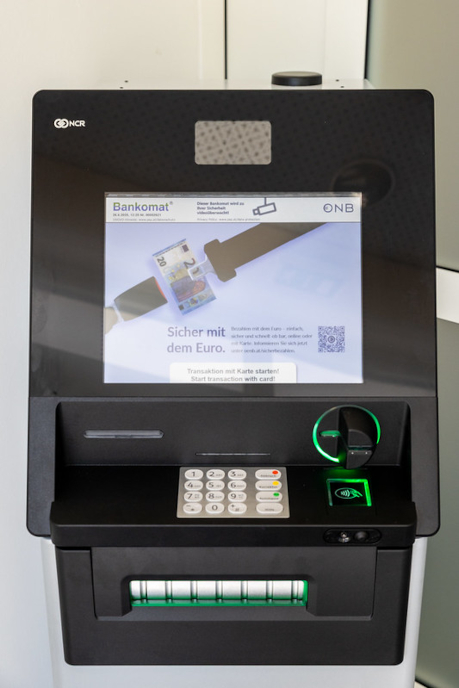
Austria’s cash supply network is among the best-developed networks in Europe. As Austria’s central bank, the OeNB has a keen interest in ensuring that all regions of our country are reliably supplied with cash. The most important basis for the supply of cash across Austria is the network operated by Austrian banks. In addition to that, the OeNB has been installing new ATMs to provide targeted supply to remote areas that were previously underserved. Withdrawing cash from OeNB ATMs is free of charge – even if you use a foreign bank card.
Between 2025 and 2027, the OeNB plans to gradually install up to 120 new ATMs. To this end, it collaborates with the Austrian Association of Municipalities and the Austrian Association of Cities and Towns. Priority will be given to rural communities that meet the following criteria:
- There are no ATMs or bank branches within the municipality.
- The municipality has at least 500 residents.
- The average distance to the nearest ATM is at least two kilometres.
- The new ATM will reduce this average distance by at least one kilometre.
The OeNB is working with PSA Payment Services Austria GmbH to implement the project.
The application process has concluded – implementation is underway and will continue until early 2027.
120 OeNB ATMs in remote areas
In 2027, there shall be OeNB ATMs in 120 Austrian municipalities.
The first OeNB ATM was put into service on 1 July 2025 in Obritzberg-Rust (Lower Austria). For further information, see the related press release in the link section.
| Bundesland | Postleitzahl | Gemeinde | Adresse |
| Niederösterreich | 2152 | Gnadendorf | Gnadendorf 15 |
| Niederösterreich | 2154 | Gaubitsch | Gaubitsch 2 |
| Niederösterreich | 2223 | Hohenruppersdorf | Obere Hauptstraße 4 |
| Niederösterreich | 2251 | Ebenthal | Hauptstraße 58 |
| Niederösterreich | 2264 | Jedenspeigen | Hauptstraße 11 |
| Niederösterreich | 2274 | Rabensburg | Hauptstraße 80 |
| Niederösterreich | 2320 | Rauchenwarth | Rauchenwarth 57 |
| Niederösterreich | 2332 | Hennersdorf | Achauer Straße 2 |
| Niederösterreich | 2403 | Regelsbrunn | Bauernzeile 2 |
| Niederösterreich | 2412 | Wolfsthal | Hauptstraße 45 |
| Niederösterreich | 2443 | Stotzing | Hauptstraße 19 |
| Niederösterreich | 2475 | Neudorf | Badstraße 1 |
| Niederösterreich | 2561 | Hernstein | Berndorfer Straße 5 |
| Niederösterreich | 2620 | Natschbach-Loipersbach | Ortsstraße 14 |
| Niederösterreich | 2761 | Miesenbach | Kreuzbach 100 |
| Niederösterreich | 2770 | Gutenstein | Markt 100 |
| Niederösterreich | 3012 | Wolfsgraben | Hauptstraße 46 |
| Niederösterreich | 3073 | Stössing | Stössing 37 |
| Niederösterreich | 3110 | Neidling | Walter-Eder-Straße 7 |
| Niederösterreich | 3123 | Obritzberg | Marktstraße 14 |
| Niederösterreich | 3262 | Wang | Oberer Markt 1 |
| Niederösterreich | 3393 | Zelking | Pöchlarnerstraße 4 |
| Niederösterreich | 3426 | Muckendorf-Wipfing | Bahnstraße 3 |
| Niederösterreich | 3602 | Rossatz | Rossatz 156 |
| Niederösterreich | 3610 | Weinzierl am Walde | Weinzierl am Walde 50 |
| Niederösterreich | 3641 | Aggsbach-Markt | Markt 48 |
| Niederösterreich | 3654 | Raxendorf | Raxendorf 10 |
| Niederösterreich | 3661 | Artstetten-Pöbring | Schlossstraße 1 |
| Niederösterreich | 3861 | Eggern | Marktplatz 1 |
| Niederösterreich | 3872 | Amaliendorf-Aalfang | Hauptstraße 190 |
| Niederösterreich | 3961 | Waldenstein | Waldenstein 49 |
| Niederösterreich | 3970 | Moorbad Harbach | Lauterbach 32 |
| Niederösterreich | 3950 | Großdietmanns | Kirchenplatz 1 |
| Oberösterreich | 4046 | Oftering | Ofteringer Straße 1 |
| Oberösterreich | 4070 | Fraham | Hauptstraße 43 |
| Oberösterreich | 4091 | Vichtenstein | Vichtenstein 70 |
| Oberösterreich | 4102 | Goldwörth | Schulstraße 1 |
| Oberösterreich | 4170 | St. Oswald/Haslach | St. Oswald 18 |
| Oberösterreich | 4533 | Piberbach | Dorfplatz 3 |
| Oberösterreich | 4650 | Edt bei Lambach | Gemeindeplatz 1 A |
| Oberösterreich | 4762 | St. Willibald | Hauptstraße 35/1 |
| Oberösterreich | 4961 | Mühlheim/Inn | Kirchenstraße 2/1 |
| Oberösterreich | 5123 | Überackern | Dorfstraße 9 |
| Oberösterreich | 5223 | Pfaffstätt | Florianistraße 1 |
| Oberösterreich | 5225 | Jeging | Jeging 22 |
| Tirol | 6408 | Pettnau | Tiroler Straße 104 |
| Tirol | 6571 | Strengen | Dorf 12a |
| Tirol | 6591 | Grins | Grins 57 |
| Vorarlberg | 6781 | Bartholomäberg | Luttweg 1 |
| Burgenland | 7410 | Loipersdorf-Kitzladen | Hauptplatz 1 |
| Burgenland | 7435 | Unterkohlstätten | Unterkohlstätten 32 |
| Burgenland | 7453 | Steinberg-Dörfl | Untere Hauptstraße 10 |
| Burgenland | 7461 | Allersdorf | Allersdorf 10 |
| Burgenland | 7501 | Oberdorf im Burgenland | Untere Hauptstraße 9 |
| Burgenland | 7503 | Jabing | An der Pinka 18 |
| Burgenland | 7522 | Heiligenbrunn | Heiligenbrunn 33 |
| Burgenland | 7536 | Güttenbach | Marktplatz 1 |
| Burgenland | 7537 | Neuberg i. Bgld. | Hauptplatz 1 |
| Burgenland | 7572 | Deutsch Kaltenbrunn | Obere Martktstr. 8 |
| Steiermark | 8046 | Stattegg | Dorfplatz 1 |
| Steiermark | 8051 | Thal | Unterthalstraße 20 |
| Steiermark | 8113 | Stiwoll | Stiwoll 24 |
| Steiermark | 8152 | Södingberg | Södingberg 35c |
| Steiermark | 8181 | Mitterdorf an der Raab | Kleinhappl 8 |
| Steiermark | 8294 | Unterrohr | Unterrohr 24 |
| Steiermark | 8322 | Eichkögl | Eichkögl 30 |
| Steiermark | 8385 | Neuhaus/Klausenbach | Hauptstraße 14 |
| Steiermark | 8411 | Hengsberg | Hengsberg 23 |
| Steiermark | 8573 | Kainach bei Voitsberg | Kainach 156 |
| Steiermark | 8580 | St. Martin am Wöllmißberg | St. Martin am Wöllmißberg 64 |
| Steiermark | 8712 | Proleb | Gemeindestr. 2 |
| Steiermark | 8755 | Rothenthurm | Triesterstraße 14 |
| Steiermark | 8756 | St. Georgen ob Judenburg | St. Georgen ob Judenburg 12 |
| Kärnten | 9103 | Diex | Diex 25 |
| Kärnten | 9170 | Zell | Zell-Pfarre 75 |
| Kärnten | 9173 | St. Margareten im Rosental | St. Margareten 9 |
| Kärnten | 9212 | Techelsberg am Wörther See | St. Martin 4 |
| Kärnten | 9322 | Micheldorf | Hauptstraße 28 |
| Kärnten | 9712 | Fresach | Dorfplatz 160 |
| Kärnten | 9713 | Stockenboi | Zlan, Kirchplatz 2 |
Dashboard: How far is the nearest ATM in Austria?
This OeNB dashboard provides a comprehensive overview of the availability and accessiblility of ATMs in Austria. Based on the latest analyses and indicators, it provides a clear picture of regional differences down to the municipal level.
Related links
- Thematic images: OeNB ATMs
- Ein Jahr OeNB-Bankomat®-Initiative: mehr als ein neuer Standort pro Woche OeNB press release (German) of 06.07.2026
- Städtebund tritt Übereinkommen zur Bargeldversorgung bei OeNB press release (German) of 20.10.2025
- Nationalbank stärkt flächendeckende Bargeldversorgung im ländlichen Raum OeNB press release (German) of 01.07.2025
You may also be interested in

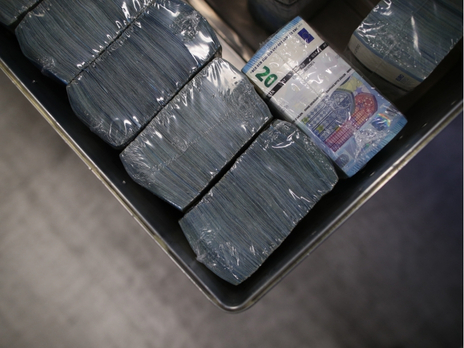
Euro coins are issued by the individual euro area countries. At the European level, the European Commission coordinates all important matters relating to euro coins.
One of the ECB’s key tasks is to oversee the work of the national central banks and to work towards ensuring a uniform approach to cash services across the euro area.
The national central banks are responsible for ensuring that the supply of cash in their countries runs smoothly. They put euro banknotes and coins into circulation, mainly through banks. To a lesser extent, cash distribution also takes place via the retail sector. This ensures that people have access to cash at all times.
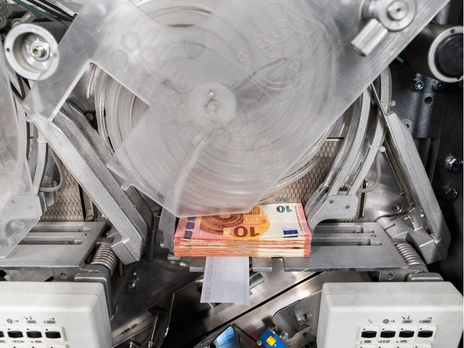
What is the cash cycle?
Traditionally, cash supply follows a cycle. Newly printed banknotes and newly minted coins are delivered to the central bank. The central bank then passes them on to the commercial banks. These, in turn, supply businesses and people with cash.
When cash flows back into the economic cycle, it returns to the central bank via the commercial banks. That is where banknotes and coins are checked and processed. Damaged or heavily worn banknotes and coins are sorted out and taken out of circulation. Cash fit for circulation is reissued to commercial banks together with newly produced banknotes and coins.