Euro cash – our banknotes and coins
Cash has a number of unique characteristics and offers many benefits: It can be used instantly, it works without any technical infrastructure, it is inclusive and fosters a high level of trust. Using cash means making use of your freedom of choice when making your daily payments. The OeNB is committed to ensuring that cash payments will continue to be possible in the future – as a reliable payment option for everyone.
.jpg)
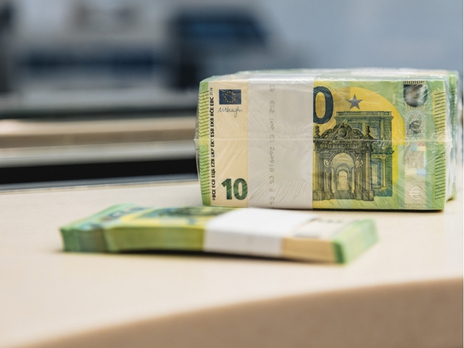
Modern and easy to use
Cash is the only public means of payment that works independently of commercial providers. It belongs to society – physically, directly and without any need for intermediaries.
As a means of payment that is free of charge, it ensures fair competition and protects users from hidden costs or dependencies. In the digital age, cash stands for transparency, stability and genuine freedom of choice.
.jpg)
Safe by design
Cash is data protection in action: Cash payments are private, leave no data trails and do not disclose any data to third parties. At the same time, cash meets the highest security standards – with state-of-the-art technology incorporated into every banknote.
Cash works at any time – without electricity, without the internet, and without being dependent on any particular system. Especially in uncertain times, cash provides a stable foundation for payments.
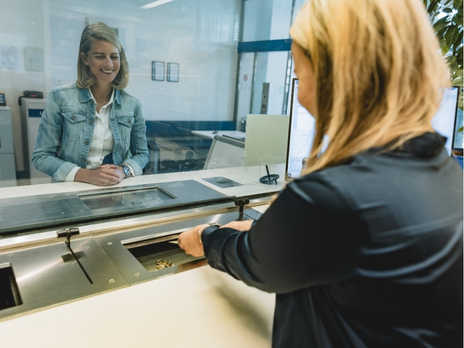
Relatable and effective
Cash fosters genuine encounters and makes value tangible. Cash is accessible to everyone – regardless of age, technical ability or social background. At the same time, cash encourages mindful spending and helps build awareness for money issues in everyday life. Cash is simple – and that is its strength.
Five good reasons to use cash
There are recurring fears and concerns that cash will be phased out. In our view, cash is here to stay. This video gives five good reasons why.
Freedom of payment choice
As a central bank, the OeNB advocates freedom of payment choice and, consequently, the preservation of high-quality euro cash as a public means of payment and a cornerstone of the payment system.
Tip for emergencies
It’s a good idea to keep some cash at home. The OeNB recommends keeping an amount equivalent to roughly two weeks’ worth of shopping (or up to EUR 100 EUR per household member) in small denominations in a safe place. In this way, you can still make payments even if electronic payment methods are unavailable.
You may also be interested in
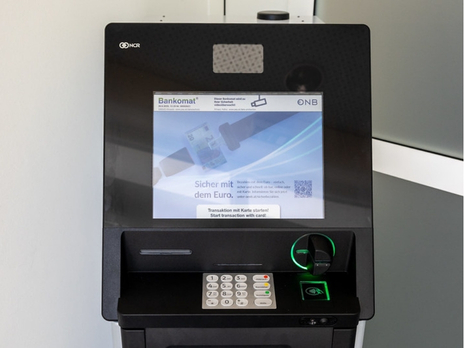
Closing the gap: the OeNB's ATMs
Ensuring cash supply and easy access to cash for everyone in Austria is one of the OeNB’s key objectives. This is why we have begun to address existing gaps in the supply of cash in remote rural areas.
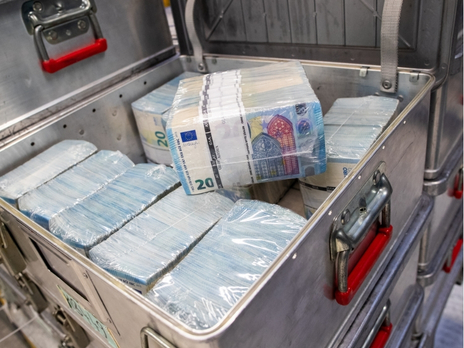
We put these principles into practice through specific measures:
- With its state-of-the-art cash centres and automated sorting and counting systems, the GSA ensures fast, secure and resource-efficient cash logistics – for banks and payment service providers as well as the retail sector.
- Münze Österreich AG combines tradition and innovation. In addition to minting circulation coins, it regularly develops new product ranges such as collector coins and precious metal products. Its Vienna Philharmonic coin is one of the world’s most prestigious bullion coins.
- The OEBS has evolved from a traditional banknote printing works into an international banknote competence centre. It produces the share of euro banknotes allocated to Austria by the ECB (and some of Belgium’s share) as well as foreign currencies for international customers. Strategic partnerships also play a crucial role in the company’s success: The OEBS closely cooperates with the Banque de France and, within the framework of the “Euro Printing Inhouse Cooperation (EPIC)”, with the central banks of Belgium and Portugal.


You may also be interested in

Euro cash, a digital euro and the role of the OeNB
The current debate about cash and electronic payments highlights just how much the payment landscape is changing. Owing to its unique characteristics, cash continues to be very popular in Austria. At the same time, EU institutions and central banks are working on a potential digital counterpart of euro cash: a digital euro. The European Commission has put forward a comprehensive package, the Single Currency Package, designed both to safeguard access to cash and to establish a framework for digital central bank money. The OeNB is actively involved in this process. One of the key concerns is the equal treatment of cash and the digital euro with regard to mandatory acceptance by businesses.
- Strengthening cash – mandatory acceptance, secure supply, national discretion.
- Developing a digital euro – a complement to cash, user-friendly, secure and free of charge.
- Ensuring equal treatment – clear obligations for businesses with regard to cash/digital euro acceptance, sensible exceptions.
- OeNB playing a key role – in EU processes, in the dialogue with market participants, and in drafting positions for consultations.
You may also be interested in
The proposed EU Regulation on the legal tender of euro banknotes and coins is intended to safeguard the mandatory acceptance of euro cash across Europe even more effectively in the future. It aims to guarantee that euro cash remains available, accessible and accepted in the long term and to protect citizens’ freedom of payment choice.
There is no upper limit for cash payments in Austria. This means that you can make cash payments of any amount.
At the moment, there is no law restricting the amount of cash payments in Austria. This will change on 10 July 2027, when new rules under the EU Anti-Money Laundering Regulation (Regulation (EU) 2024/1624 come into force. From then on, a limit of EUR 10,000 will apply to cash payments in trade and business. This means that companies will no longer be permitted to accept cash amounts in excess of this limit.
In addition, retailers will have to verify and document the identity of customers that make cash payments of EUR 3,000 or more, as required under the relevant due diligence obligations set out in the Anti-Money Laundering Regulation (EU) 2024/1624.
The EUR 10,000 limit will not apply to purely private-to-private cash payments. Moreover, it will still be permitted to hold, withdraw or deposit any amount of cash, as these areas are not covered by the above restrictions.
Counterfeit banknotes or coins must not be accepted in payments. If you come across counterfeit money, you must hand it over to the OeNB or to Münze Österreich AG for verification (Article 79 Nationalbank Act).
There are strict regulations for businesses and their cashiers:
- If they accept cash payments, they must verify the change they give.
- If they receive suspicious banknotes, they must check them against their security features.
- If they receive counterfeit banknotes, they must not pass them on under any circumstances.
As a general rule, there is an obligation to accept all euro banknotes throughout the euro area. All euro banknotes issued by the OeNB, the European Central Bank (ECB) and the national central banks of the other euro area countries are legal tender. Pursuant to Article 61 Nationalbank Act, euro banknotes must be accepted at their full nominal value without restriction. This means that, on principle, there is an obligation to accept all denominations of euro banknotes, from the EUR 5 to the EUR 500 banknote, without any exception. Generally excluding certain categories of euro banknotes from acceptance is therefore in contradiction to the principle of unrestricted acceptance laid down in Article 61 Nationalbank Act.
Pursuant to Article 8 Austrian Coinage Act the following upper limits apply to the acceptance of euro coins per transaction:
- There is no upper limit for the acceptance of coins by the OeNB and Münze Österreich AG.
- Local, regional and federal authorities must accept up to 100 euro coins.
- All other legal entities or individuals must accept up to 50 euro coins (of which no more than ten commemorative coins).