Card payments & mobile payments
For our daily payments, we use all kinds of modern payment options: We make contactless payments by card or smartphone, or we use online payment methods such as e-wallets. This way, we have the benefit of safe, fast and convenient payments and the opportunity to help shape Europe’s increasingly digital payment environment.
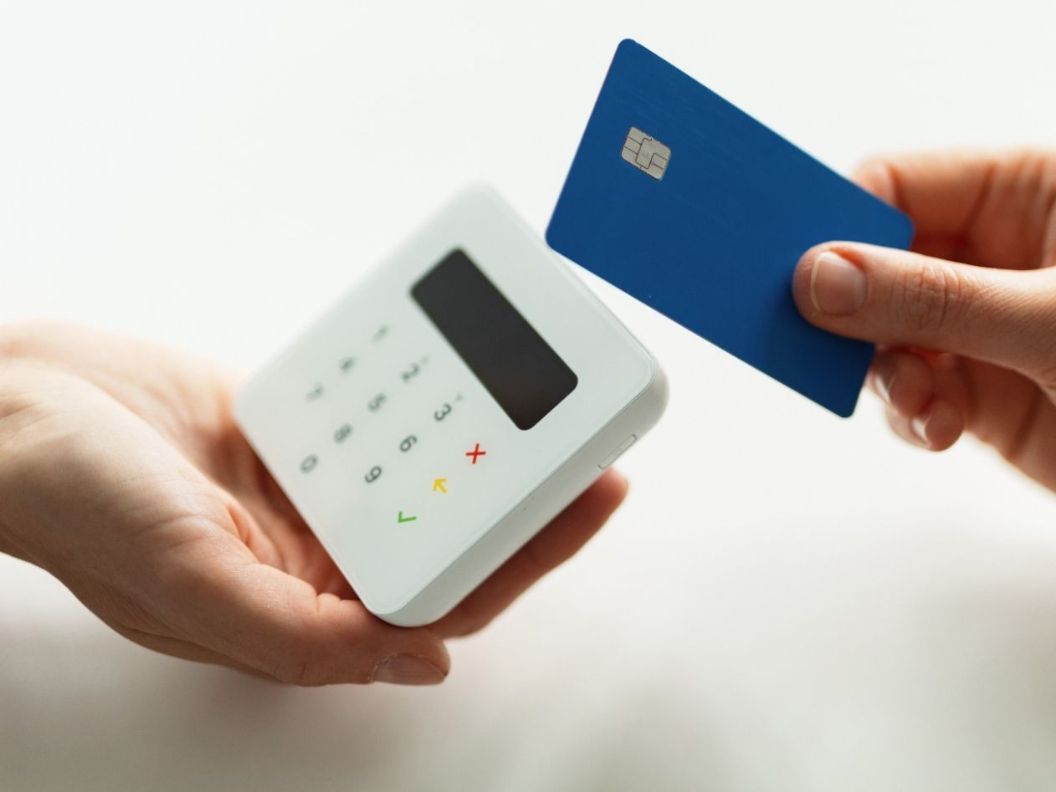
Paying by card
How debit cards work
You can use debit cards or bank cards to withdraw cash from your bank account and to make cashless payments in shops and restaurants or when shopping online. Unlike when paying by credit card, the amount paid is debited from your bank account immediately (or shortly afterwards).
In Austria, most people use debit cards to make cashless payments when shopping in-store. Most of these payments are contactless. Since 2019, the Maestro cards that used to be common in Austria have been gradually replaced by more modern cards (Debit Mastercard and Visa Debit). You can use these new cards also to make online payments. Moreover, you can add most debit cards to your smartphone or smartwatch to make mobile and contactless payments using these mobile devices.
How credit cards work
You can use credit cards to make cashless payments in shops, restaurants or online. Unlike when paying by debit card, the transactions made by credit card are accumulated and settled together at regular intervals. Depending on the type of credit card you use, the accumulated amount due is either debited from your account in total after a certain period (charge card) or in instalments (revolving card). In technical terms, this means that you are granted a short-term loan.
In Austria, credit cards are mainly used for booking holidays and for online shopping. People tend to pay with credit cards less often at the point of sale, e.g. in shops. For online shopping, e-wallets and other payment methods are being used more and more often.
Mobile and contactless payments
Paying via NFC
Near Field Communication (NFC) is an encrypted short-range wireless technology. It allows you to make contactless, safe and fast payments at a payment terminal using cards, smartphones or smartwatches. To do this, you need to activate the NFC chip on your card or mobile device. You can then pay by holding the card or device up to the payment terminal. Payment data are transmitted in encrypted form, and the bank verifies your payment within a few seconds. This makes payments quick and safe – and it works even when your mobile’s battery is almost flat (or, on many devices, even when the battery is at 0% or in emergency mode).
Paying via QR code
To pay via QR code you can use a payment app on your smartphone. All you need to do is scan the QR code, which contains the necessary payment details (e.g. amount, payee). The app will analyse the data and display them on your smartphone for confirmation. Payment is then initiated via your bank account or e-wallet. Paying by QR code is safe and works worldwide. It is contactless and easy to use. You do not need to enter an IBAN or an amount.
Paying with digital wallets
A digital wallet is a digital system that allows you to store and manage money and make payments with it. This works either offline, using a chip card that can be topped up, or online (e-wallet), or via payment apps such as Apple Pay or Google Pay (mobile wallets). The latter store credit card data, banking information and bank account details. Payments can be made via NFC, QR code or online authorisation. Data are encrypted and access is secured by a PIN, fingerprint or facial recognition. This makes payments safe and convenient.
Other mobile payments
A payment function can also be integrated into tiny digital devices in wearables (portable electronic devices such as fitness trackers or smartwatches) and payment stickers. This makes it possible to use digital payment systems discreetly and around the clock. Payment functions that are integrated into wearables also rely on NFC technology.
What digital payment services are available?
A number of payment services providers offer digital and mobile payments as fast alternatives to cash and traditional card payments.
- PayPal enables online payments and money transfers (even without involving a bank account).
- Klarna offers flexible payment options such as payment on invoice (“pay in 30 days”) or payment over time.
- Wero is based on SEPA instant credit transfers between bank accounts.
- Apple Pay and Google Pay enable contactless payments via smartphone or smartwatch.
- Revolut and Wise offer digital accounts for international (i.e. cross-border) payments.
- Alipay, WeChat Pay and European solutions such as giropay and SOFORT have been designed specifically for online and in-app payments.
Buy Now, Pay Later (BNPL)
“Buy Now, Pay Later (BNPL)” is a payment model that responds to a trend towards flexible payment models in modern retail shopping. Using BNPL, you can buy something straight away, but you will not have to pay for it until a later date or you can pay in instalments. BNPL is becoming increasingly important. You can use BNPL when shopping online and, more and more often, also when shopping in-store. In Austria, BNPL is mostly offered by payment service providers (PSPs) such as Klarna, PayPal, Cashpresso, Riverty and Billpay. The PSP pays the purchase price immediately to the shop or online retailer and handles the subsequent settlement with the buyers.
There are various BNPL models:
- Buyers repay the amount to the PSP in instalments over several weeks or months. This is free of interest, provided the instalments are paid on time.
- Buyers repay the amount to the PSP over longer periods, with interest (like with traditional consumer loans).
- Buyers repay the total amount to the PSP within a specified period – usually 14 to 30 days – (payment by invoice).
EPI and EuroPA – new European payment solutions
Independence is important for Europe – also when it comes to payments. To date, the cashless payments market has been dominated by non-European companies such as Visa and Mastercard. This makes us dependent. This is why Europe is working on its own solutions: the European Payments Initiative (EPI) and the European Payments Account (EuroPA) are major steps on the road towards greater independence in payments.
The EPI has developed a method for wallet payments: Wero. The name combines the words “we” and “euro”. Wero is already in use in several European countries. It is an independent European solution for digital payments based on secure instant credit transfers, and it is set to be available for card payments in future.
In addition, EuroPA is intended to facilitate the cooperation between national payment systems – by providing various providers with standardised access to payment accounts within the EU.
Both initiatives aim to make European companies operating in cashless payments (payment service providers – PSPs) more competitive and to offer customers more choice, efficiency and control. They form part of the EU Retail Payments Strategy, which aims for a secure, modern and inclusive payments environment for Europe.
Another key initiative aimed at strengthening Europe’s autonomy and resilience is the project for a digital euro. A digital euro would be digital cash, which means it would be put into circulation directly by the central bank. The digital euro project is currently in its technical preparation phase – you can find out more about it in the “Digital euro” section.