Gold reserves
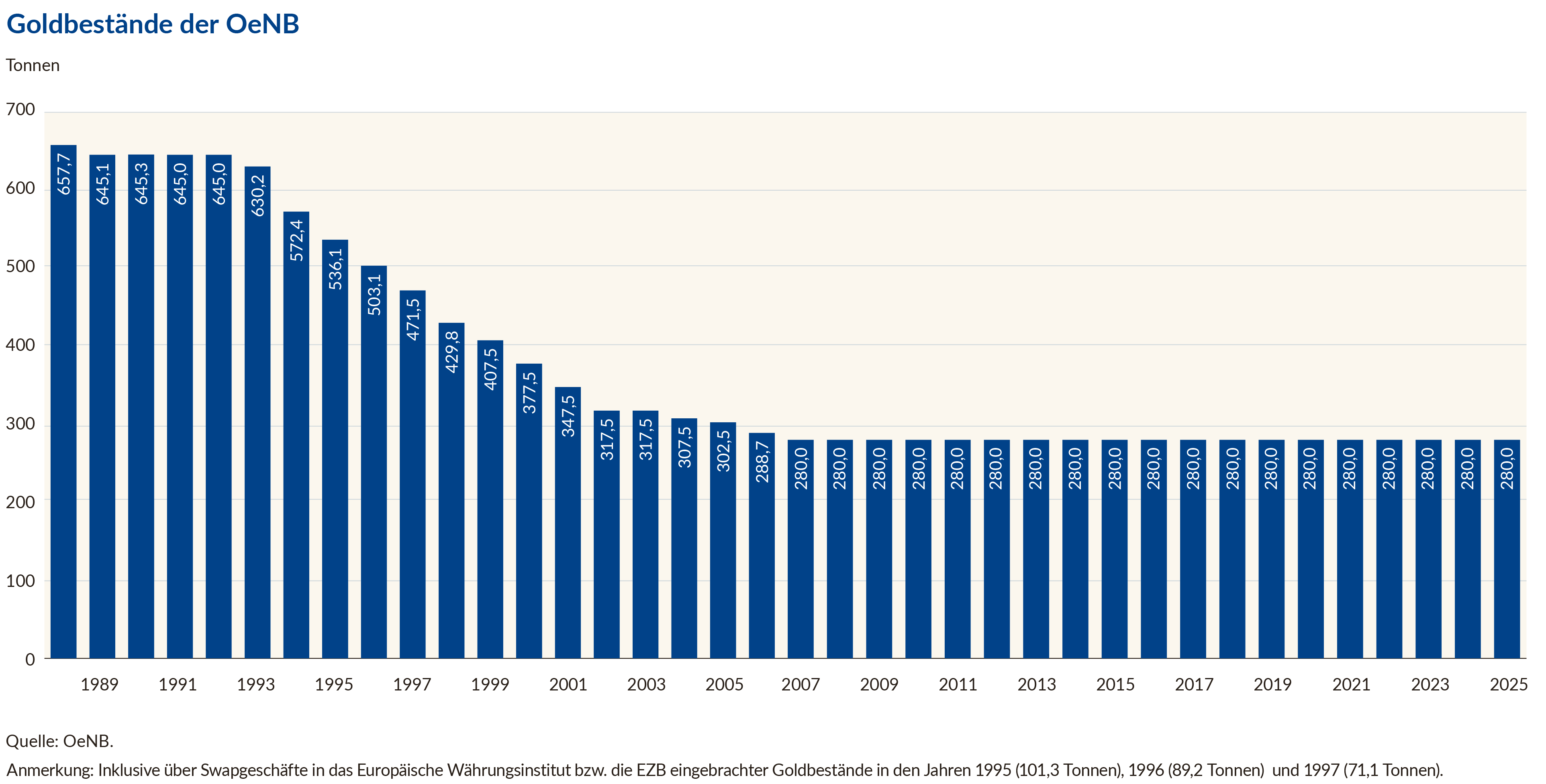
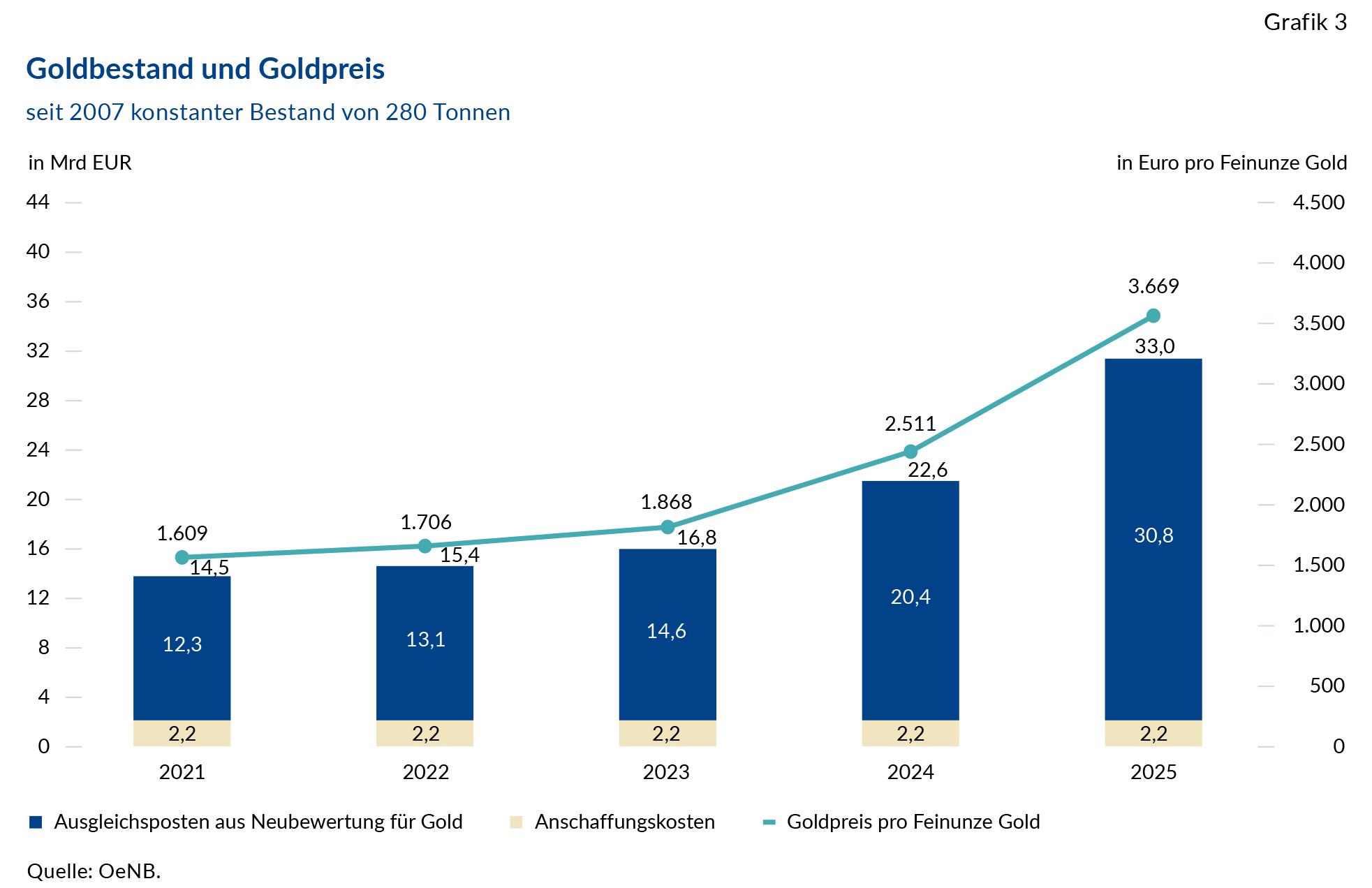
Austria owns around 280 tonnes of gold. These gold reserves serve as a safeguard in times of crisis and strengthen confidence in our monetary system. The OeNB manages these reserves with great care.
How much gold does Austria have and where is it stored?
Austria has around 280 tonnes of gold.
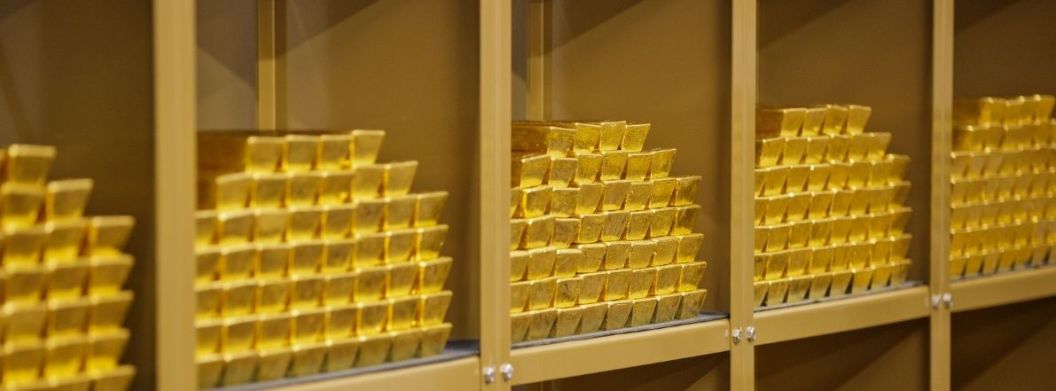
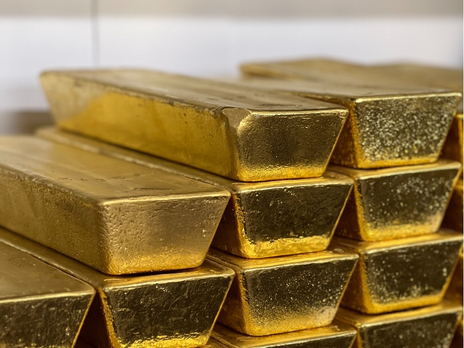
Of this total, around 139 tonnes are currently stored in Austria. Around 90 tonnes, that is 7,200 gold bars, are stored in the OeNB's vaults. The remainder of Austria’s domestically held gold is stored in the vaults of Münze Österreich AG. The approximately 141 tonnes stored abroad are held in London (around 84 tonnes), Paris (around 50 tonnes) and Switzerland (around 7 tonnes).
This storage strategy reduces concentration risk by avoiding reliance on a single location while also ensuring that gold can be mobilised quickly, if needed, through major international trading centres in London, Paris and Switzerland.
Authenticity testing
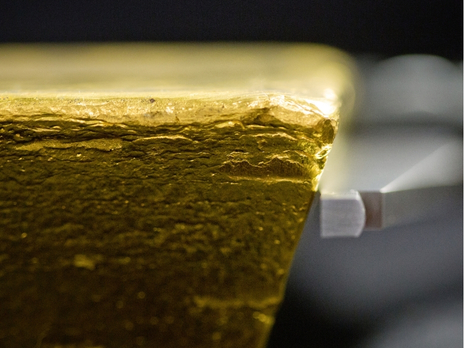
To safeguard against counterfeiting, gold is subjected to rigorous testing with modern inspection methods. Not only the surface of a bar is examined, but also its interior.
The tests include precise weight measurements, ultrasound scanning and X-ray fluorescence analysis to determine the composition of the bar. Together, these methods can detect even the smallest irregularities.
Gold trading and pricing
London, Zurich and New York remain the world’s leading centres for gold trading. Gold prices are generally quoted in US dollars per troy ounce (1 troy ounce = 31.1034768 grams).
The price of gold is determined by supply and demand. Key factors include demand from the jewellery industry, industrial demand, particularly from the electronics sector, and investment demand for gold bars and coins. Purchases and sales by central banks also influence the gold price. Gold prices are fixed twice daily, at 10:30 and 15:00 London time, on the London bullion market, the world’s most important over-the-counter market for gold and silver trading.
Gold reserves are primarily held as a precaution. Their purpose is not to generate short-term profits but to support long-term stability and resilience.
International storage locations ensure rapid access, even during periods of market stress. Like Austria’s domestically held reserves, gold abroad is kept safe by applying the highest security standards.
Gold prices are influenced by supply and demand, investor sentiment and economic developments around the world.
No. The OeNB does not sell gold to private individuals. If you wish to buy gold, you can contact our subsidiary Münze Österreich AG, for example.
Gold plays a unique role as a stable and internationally recognised reserve asset. Silver does not have the same significance within the international financial system.
Gold coins can be bought and exchanged through specialised dealers, banks or our subsidiary Münze Österreich AG.
According to end-2025 estimates by the World Gold Council, approximately 219,891 tonnes of gold have been mined over the course of human history, roughly two-thirds since 1950. If all that gold were brought together, it would form a cube measuring roughly 22 metres on each side.
As with most valuable assets, attempts have repeatedly been made to counterfeit gold bars. The basic method has hardly changed over time: the core of a bar is replaced with a less valuable metal, such as iron, while only the outer layer consists of gold. For this reason, visual inspection alone is not sufficient to verify the authenticity.
Highly precise weighing equipment is used to determine a bar’s weight, while ultrasonic technology can detect the composition of its core. X-ray fluorescence analysis is used to measure the purity of the gold. One useful fact to remember: gold is not magnetic.