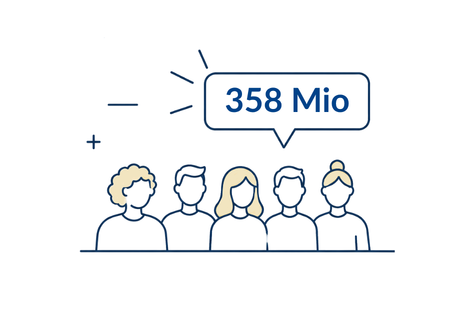
Seit dem Euro-Beitritt Bulgariens 2026 bezahlen mehr als 358 Millionen Menschen in ihrem Alltag mit dem Euro.
The euro is the common currency of 21 EU countries. People and businesses in the euro area use it every day. The euro makes paying, trading and comparing prices easier. It is managed by the European Central Bank (ECB) in cooperation with the national central banks. The OeNB participates in the Governing Council of the ECB, its main decision-making body. The primary objective of their work is to keep the value of the euro stable.
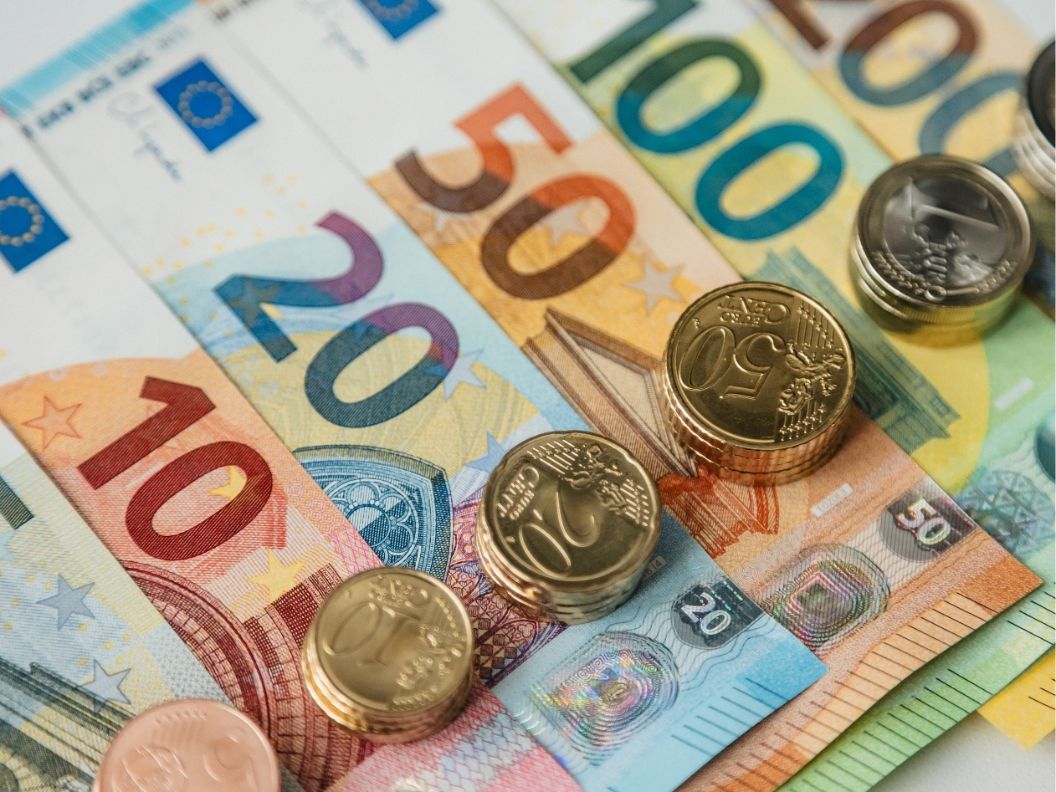
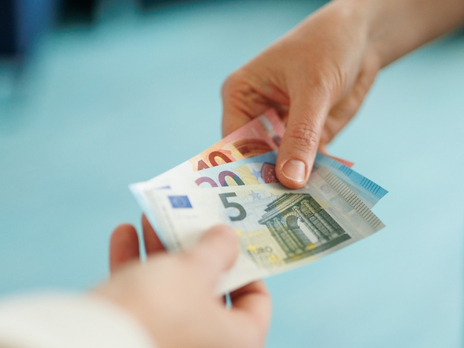
The euro brings many benefits – for people and businesses, for the countries in the euro area and for the EU as a whole. Buoyed by the strength of the euro area economy, the euro has rapidly become the world’s second most important currency. This is good for Austria, too. It means that people and businesses in our country can rely on a stable and secure currency.
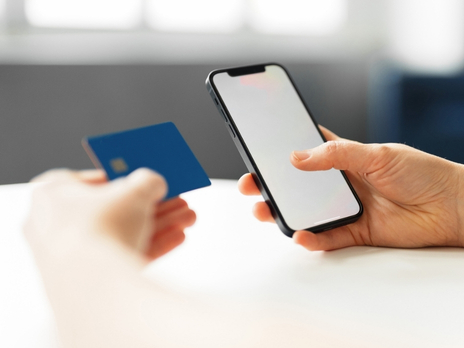
Transferring money to Germany or Italy from your Austrian bank account works just like making credit transfers within Austria. It is simple, safe and cost-effective. It is also fast – with SEPA instant credit transfers, payments within Europe take no more than a few seconds. To ensure that your payment arrives safely, the bank checks whether the IBAN (International Bank Account Number) matches the payee’s name. This helps prevent incorrect transfers and fraud.

The euro has made travelling in Europe much easier. When travelling from Austria to Greece or Italy, for instance, you don’t need to exchange any money. The same applies when travelling to Germany, Finland, Spain or any other euro area country. In all these countries, you can pay with the euro. Euro banknotes look the same across the euro area. Euro coins have a common side and a national side, which the countries designed themselves.

Thanks to the euro, Austrian companies have lower costs and greater certainty in their financial planning. When doing business with other euro area countries, they no longer need to take exchange rates into account. That saves money and reduces risks. Moreover, credit transfers within Europe are fast, secure and cost-effective. All of this has a positive impact on trade.
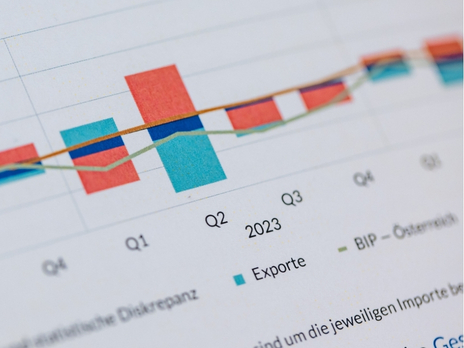
The euro is the world’s second most important currency. A small economy such as Austria benefits from using a strong, globally recognised currency like the euro. Moreover, thanks to the single currency, Austria’s economy is well integrated into a large and stable economic area – the euro area. Even when crises arise, we can rely on European cooperation.
Cash
Cash is money you can carry in your wallet. It consists of banknotes and coins that the central bank puts into circulation. You can use cash can anonymously and without any technical devices.
Bank money
Bank money is money held in bank accounts. It is created when commercial banks issue new loans to borrowers. It is used primarily for credit transfers, direct debits and card payments. It is also known as deposit money.
Central bank money
Central bank money is the money created and guaranteed by a central bank. This includes cash (banknotes and coins) and the electronic reserves commercial banks hold with the central bank. Central bank money is the safest form of money because it is backed directly by the central bank, a public institution that cannot become insolvent.
Please note: Cryptocurrencies such as bitcoin are neither money nor a currency. Based on a specific technology (decentralised blockchains), they are not controlled by government institutions. They are subject to significant price fluctuations. A special type of cryptocurrencies are stablecoins. Their value is pegged to stable reference assets such as national currencies (e.g. the euro or the US dollar), thus combining price stability with digital tradability.
Seit dem Euro-Beitritt Bulgariens 2026 bezahlen mehr als 358 Millionen Menschen in ihrem Alltag mit dem Euro.
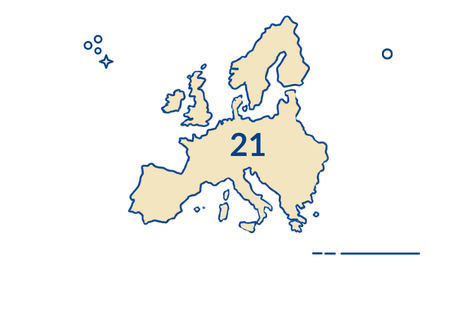
Der Euroraum besteht seit 2026 aus 21 EU-Ländern. Nur 6 EU-Länder haben den Euro noch nicht eingeführt.
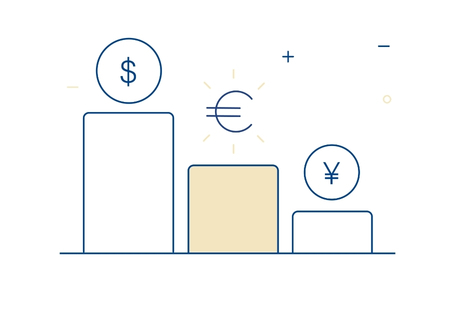
An den globalen Finanzmärkten ist der Euro die zweitwichtigste Währung der Welt nach dem US-Dollar.
Alte Schilling-Banknoten oder -Münzen können Sie bei der OeNB kostenlos zu diesem fixen Kurs umtauschen.

Der Euro ist ein Friedensprojekt und das greifbarste Symbol der europäischen Integration.
| Austria, Belgium, Finland, France, Germany, Ireland, Italy, Luxembourg, Netherlands, Portugal, Spain | since 1999 (bank money) since 2002 (cash) |
| Griechenland | since 2001 (bank money) since 2002 (cash) |
| Slovenia | since 2007 |
| Malta and Cyprus | since 2008 |
| Slovakia | since 2009 |
| Estonia | since 2011 |
| Latvia | since 2014 |
| Lithuania | since 2015 |
| Croatia | since 2023 |
| Bulgaria | since 2026 |
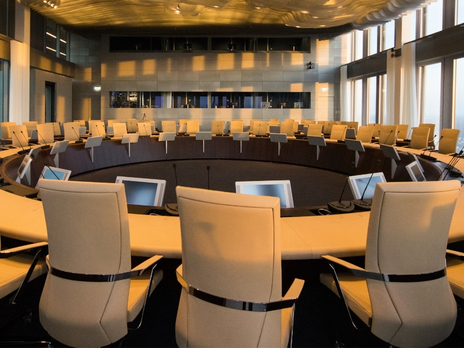
The euro is a joint project. All decisions concerning the euro are taken jointly by the Eurosystem – that is the national central banks of the euro area countries and the European Central Bank (ECB). The highest decision-making body is the Governing Council of the ECB, which consists of the governors of the euro area national central banks and the Executive Board of the ECB. The primary objective of cooperating in managing the euro is to ensure that prices remain stable and that the euro keeps its value.
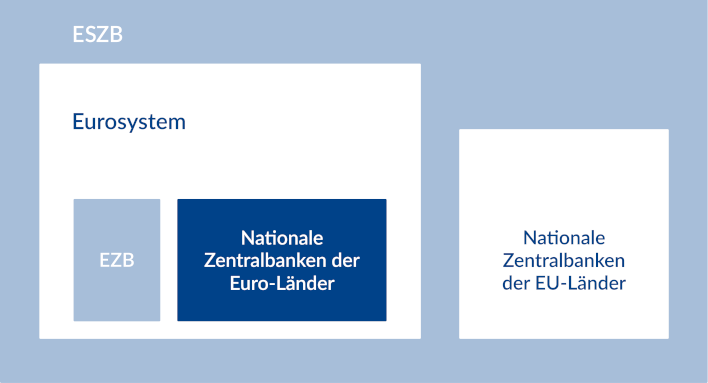
The national central banks of all EU countries hold shares in the ECB’s capital. The proportion allocated to each central bank is calculated using a specific key. It takes into account the share each EU country has in the EU’s total population and GDP. If a country has a large population and/or a very strong economy, its share in the ECB’s capital is higher.
The ECB adjusts these shares every five years – or whenever a country joins (or leaves) the EU. This helps ensure that shares in the ECB’s capital reflect the current situation of member states.
On 1 January 2026, Bulgaria adopts the euro in place of the Bulgarian lev. The euro area now consists of 21 countries.
On 1 January 2023, Croatia adopts the euro in place of the Croatian kuna. The euro area now consists of 20 countries.
During the COVID-19 pandemic, the euro area sees a historic economic downturn and a sharp rise in inflation. The ECB responds, amongst other things, with a sharp rise in key interest rates and various targeted asset purchase programmes (e.g. PEPP).
The EUR 100 and the EUR 200 banknotes are the last banknotes of the new Europa series to be issued.
The Europa series does not feature a EUR 500 banknote. This is a measure to help prevent counterfeiting and money laundering. The euro banknotes of the first series continue to be legal tender and remain in circulation.
From 2016, euro payments to countries in the EU and the European Economic Area (EEA) only require the International Bank Account Number (IBAN). Providing the international Bank Identifier Code (BIC) is no longer necessary.
This has made it even easier to transfer money across Europe.
Greece is set to default – the country is unable to repay an instalment due to the International Monetary Fund by 30 June 2015. The debate over Greece leaving the euro area (“Grexit”) gathers momentum. A mid-July EU summit successfully prevents Grexit. Greece agrees to a bailout programme that requires strict reforms.
From 2014, making cashless payments within Austria only requires the International Bank Account Number (IBAN) – an important step towards harmonising credit transfers and direct debits.
The new EUR 5 banknote is the first banknote in the Europa series to be put into circulation. One of the new security features is an image of Europa, the figure from Greek mythology our continent is named for. The new security features protect the Europa series even more effectively against counterfeiting.
The remaining banknotes in the Europa series are to be put into circulation gradually over the years to come. They are to be introduced in ascending order, i.e. the new EUR 10 banknote will be followed by the EUR 20 banknote, and so on.
In July 2013, the Governing Council of the ECB introduces “forward guidance” as a monetary policy instrument. This is first time the ECB provides guidance on its future monetary policy stance. At a press conference, a spokesperson states that the Governing Council expects key interest rates to remain low for some time to come. With this statement, the ECB succeeds in calming financial markets, provides planning security to people and businesses and signals that it is firmly committed to keeping prices stable.
In a speech in July 2012, ECB President Mario Draghi states that the ECB is set to do “whatever it takes” to save the euro. His statement becomes a catchphrase, highlighting the ECB’s determination not to let the euro area fall apart.
Although financial markets are stabilising, programmes are developed and implemented for a number of euro area countries.
The most serious crisis in the history of the euro particularly hits Greece, Portugal, Ireland, Spain and Cyprus. Among the causes are the high levels of sovereign debt in these countries. Debt had climbed to such levels in part because the countries needed money to tackle the consequences of the financial crisis. To address the sovereign debt crisis, the Governing Council of the ECB adopts unconventional measures. In this way it can e.g. ensure that there continues to be sufficient liquidity (i.e. money) in the financial system.
The global economy is being hit by a severe financial crisis. It was triggered, amongst other things, by speculations in the US real estate market. The collapse of major US bank Lehman Brothers on 15 September 2008 marked the height of the crisis.
Subsequently, Europe also experiences a severe recession. The economy is shrinking. Several European banks are having problems. The ECB and the Eurosystem take measures to help banks continue to fulfil their role in the economy effectively.
The crisis leads to closer economic cooperation between EU countries.
In parallel with the introduction of euro cash, banks and banking associations across Europe are working to establish uniform rules and standards for electronic payments throughout Europe. In early 2002, the banking industry establishes the European Payments Council (EPC). The EPC makes major contributions to creating the Single Euro Payments Area (SEPA).
On 1 January 2002, 12 EU countries simultaneously introduce euro banknotes and coins. This is the largest cash changeover in history. Already on 2 January 2002, the euro is used for 50% of all payments in Austria.Within a few days, this share rises to over 80%.
To be prepared for the first issuance of euro banknotes and coins, Austrian banks order euro cash worth around EUR 10.2 billion from the OeNB, namely
The starter kit for consumers contains 33 euro coins worth EUR 14.54.
The starter kit for businesses contains 13 rolls of euro coins, comprising a total of 525 coins worth EUR 145.50.
At 74% of cash in circulation, the OeNB records the highest frontloading rate in the entire euro area.
In Austria, a total of 1.5 billion euro coins (worth EUR 645 million) and 360 million euro banknotes (worth EUR 18.1 billion) are prepared for the euro cash changeover on 1 January 2002.
On 1 January 1999, 11 EU countries introduce the euro as bank money. Initially,it is to be used only as a unit of account in banking. The euro replaces the previous common unit of account, the ECU, at a rate of 1:1.
The European System of Central Banks (ESCB) comes into force and starts managing the single currency.
Irrevocable euro conversion rates are specified for the legacy currencies of the euro area countries. The irrevocable euro conversion rate for the Austrian schilling is EUR 1 = ATS 13.7603.
The European Central Bank (ECB) begins its work on 1 June 1998. The ECB is headquartered in Frankfurt am Main (Germany). It carries on the work of the European Monetary Institute (EMI), which was instrumental in preparing the establishment of the ECB and the creation of the single currency.
The ECB’s first major task is to manage the introduction of the euro. Since then, it has made sure that the euro keeps its value and that prices in the euro area remain stable.
By doing so, it supports economic growth and job creation.
Austrian designer Robert Kalina wins the design competition for the first series of euro banknotes. The windows and doorways depicted on the front of the new banknotes stand for the European spirit of openness and cooperation. The bridges depicted on the back symbolise communication – both between the people of Europe and between Europe and the rest of the world.
Luc Luycx from Belgium wins the design competition for the common side of the euro coins. Each euro area country is free to design the national sides of their euro coins.
On 15 December 1995, the Madrid European Council decides on the name of the future single currency: It will be called the “euro”.
The name is derived directly from “Europe” and symbolises the shared identity and close cooperation between the countries of our continent. Another important factor in naming the single currency is that “euro” is easy to pronounce in all languages involved.
On 1 January 1995, Austria, Finland and Sweden join the European Union. Austria also joins the Exchange Rate Mechanism (ERM). The OeNB is now represented at the informal meetings of EU finance ministers (informal ECOFIN).
The European Monetary Institute (EMI) is established. Its tasks are, among other things, to coordinate the common monetary policy within the EU, to promote cooperation between national central banks and to prepare the establishment of the European Central Bank (ECB) and the European System of Central Banks (ESCB) as well as the introduction of the euro.
The OeNB is directly involved in the work of the EMI, as the governors of the national central banks are represented on its highest decision-making body, the EMI Council.
The EMI is the ECB’s forerunner institution.
The Maastricht Treaty (Treaty on European Union) is signed on 7 February 1992 and comes into force on 1 November 1993. It provides for the mandatory establishment of Economic and Monetary Union (EMU) in three stages, to be implemented by 1999:
The European Monetary System (EMS) is created. Its objective is to stabilise exchange rates within the European Economic Community (EEC).
The European Currency Unit (ECU) is introduced. It is used solely as a unit of account.
The EEC countries agree on a specific range within which the exchange rates of their currencies may fluctuate. This is the beginning of the Exchange Rate Mechanism (ERM).
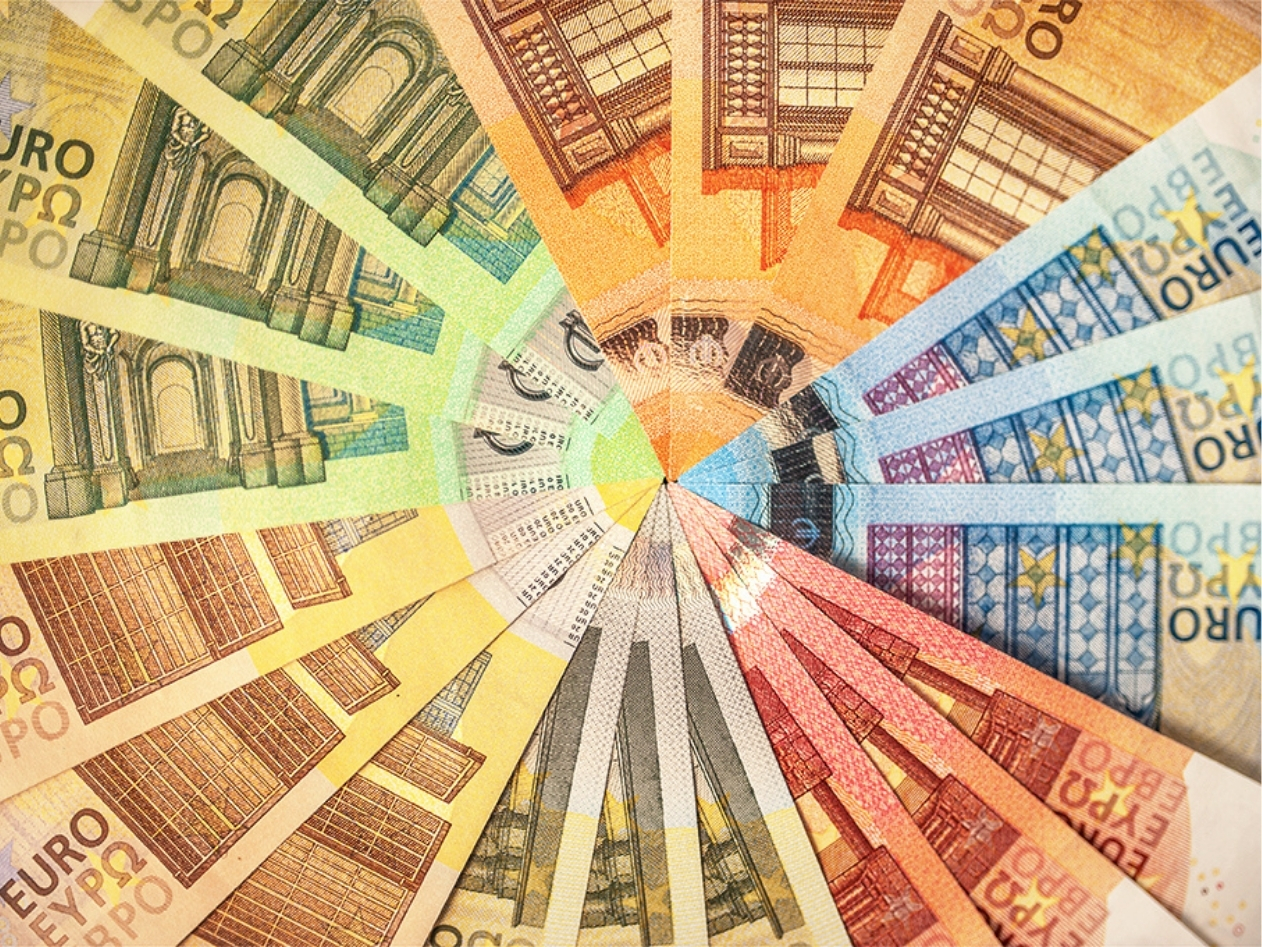
The European Central Bank (ECB) is currently working on developing the third series of euro banknotes. In doing so, it also takes into account the views of the people of Europe. Our new banknotes are designed to be fit for the future: counterfeit-proof, sustainable and environmentally friendly. And they will be more relatable to all Europeans.
Together with the national central banks of the euro area, the ECB is examining the possible introduction of a digital euro. A digital euro would be designed to work like digital cash, allowing people to make fast, independent and safe digital payments across the euro area. It would complement our banknotes and coins – like a digital twin.
The euro was introduced to better support the economy in the European Union and to promote the European single market. This strategy has been a success: The euro makes it easier for people and businesses in Europe to make payments and conduct business.
For you, the euro means that
The euro symbol “€” stands for the first letter of the word “Europe”. It is modelled on the Greek letter epsilon (ɛ) – the first letter in the word “Europe” if you spell it in Greek. Our continent is named after a figure from Greek mythology: Europa, a Phoenician princess with whom Zeus, the King of the Gods, had fallen in love. Disguised as a bull, Zeus took Europa away with him.
At present, the following EU countries still use their national currencies: Czechia, Denmark, Hungary, Poland, Romania and Sweden.
Czechia, Hungary, Poland, Romania and Sweden have opted to delay introducing the euro for various reasons.
Denmark secured an exemption (opt-out clause) under the Maastricht Treaty. It is therefore under no legal obligation to adopt the euro as its currency.
Denmark has participated in the Exchange Rate Mechanism II (ERM II) since 1999, which means that the exchange rate of the Danish krone is pegged to the euro (within a certain band).
Participation in ERM II is a prerequisite for adopting the euro at a later date.
Yes, some countries and territories outside the EU use the euro as their currency:
In some regions outside Europe, the euro is also used as legal tender. For example, in the French overseas territories or other French regions in the Indian Ocean and the Pacific Ocean. The island of Réunion, for instance.
Before an EU country is allowed to adopt the euro, it must meet a series of requirements – the so-called convergence criteria (or Maastricht criteria). In other words, a country must demonstrate that its economy can compete with that of the euro area. It must also have participated successfully in the Exchange Rate Mechanism II (ERM II) for at least two years.
The convergence criteria relate to price developments (i.e. inflation), government debt, exchange rates and long-term interest rates.
When a country adopts the euro, an irrevocable euro conversion rate is set for its old currency (the legacy currency). At this rate, banknotes and coins of the legacy currency can be exchanged for euro. Irrevocable euro conversion rates have been set for the legacy currencies of all euro area countries. These rates do not change. The exchange rate for the Austrian schilling is EUR 1 = ATS 13.7603.
The Stability and Growth Pact (SGP) is a set of EU rules. It represents Stage Three of Economic and Monetary Union (EMU). Its role is to monitor and coordinate the fiscal policies of EU member states, thereby ensuring that they maintain sound public finances. This means that the countries must not run up excessive debts and that they must keep their budget deficits small enough such as not to jeopardise the euro.
