Payments in Europe (SEPA)
With the euro, you can make cash payments across the euro area. You can also use the euro to make electronic payments across Europe – within the Single Euro Payments Area (SEPA). SEPA payments are simple, fast and safe. SEPA credit transfers and direct debits work the same way across the entire SEPA region– not only in Austria, but also across national borders.

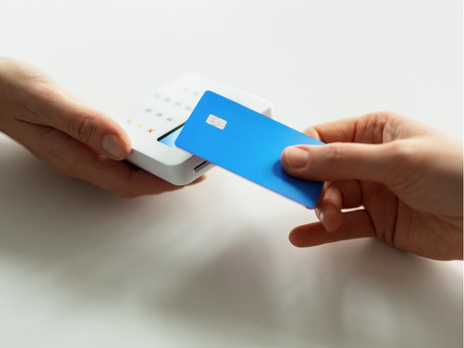
Your bank card and debit card work throughout Europe
Bank cards and debit cards work anywhere in Europe. You can use them both to withdraw cash from ATMs and to make cashless payments in shops and restaurants. This means you can access your money anytime and anywhere.

You can transfer money quickly within Europe
SEPA credit transfers are fast. A SEPA instant credit transfer (SEPA instant payment) takes just a few seconds. This service is available 24 hours a day, 7 days a week, 365 days a year. Even standard SEPA credit transfers are fast: They take a maximum of one banking day. This means that within SEPA, your cashless payments take next to no time.

You can pay by direct debit throughout Europe
You can make payments across Europe by SEPA direct debit. This means that, for example, companies can debit invoiced amounts directly from their customers’ accounts. For such transactions, customers give their prior authorisation – the SEPA direct debit mandate. This makes it easy for you to pay recurring expenses such as rent, electricity bills or insurance premiums.
SEPA direct debit also works with companies in other EU countries, for instance for subscriptions to foreign magazines. Companies will notify you in advance of the date on which the payment is due and of the amount to be paid. This makes it easier for you to keep track of your payments.
You can use the same bank account across Europe
In the SEPA region, people and businesses only need one bank account for all their payments. Accounts can be with any bank in a SEPA country. For businesses, in particular, this means that they need fewer bank accounts than before SEPA was established and that they can manage their payments more easily. This can help you save money.
Your bank account is safer while you transfer money across Europe
To protect your account against unauthorised direct debits in SEPA, you can e.g. set a maximum limit for direct debits or block any, or specific, direct debits. This way, you can stay in control of your account.
Equal fees across the EU
Within SEPA, cross-border euro credit transfers and direct debits to all EU and EEA countries cost the same as domestic credit transfers and direct debits – regardless of the transferred amount.
Please note: Higher charges may apply for electronic payments to SEPA countries outside the EU or the EEA – that is for payments to Albania, Andorra, Moldova, Monaco, Montenegro, North Macedonia, San Marino, Serbia, Switzerland, the United Kingdom and Vatican City.
Pay safely!
See below for useful tips for making secure payments.
You may also be interested in
2025 brings major innovations for SEPA:
- All banks in the SEPA region must be able to receive SEPA instant credit transfers (starting January 2025).
- All banks in the SEPA region must be able to send SEPA instant credit transfers (starting October 2025).
- Also, from October 2025, before authorising a credit transfer, banks must check whether the payee’s name matches the specified IBAN (IBAN-name check). This helps prevent incorrect transfers.
Mandatory strong customer authentication makes online payments and online banking in the EU and the European Economic Area (EEA) even safer.
If you wish to log into your bank account or initiate an online payment, you must verify your identity by means of two independent security factors (two-factor authentication – 2FA). As security factors, you can use
- something you know (e.g. a PIN)
- something you own (e.g. a debit card or credit card, a mobile phone)
- something that is unique to you (e.g. your fingerprint)
These factors are verified before you can log into your bank account or initiate an online payment.
You can find more information here: Strong Customer Authentication – what is it for and how does it work? – FMA Austria
Within the EU and the European Economic Area (EEA), banks may not charge higher fees for cross-border payments in non-euro currencies than for comparable domestic payments in the same foreign currencies.
Banks are allowed to charge fees for currency conversions (e.g. from euro to foreign currencies), but they must clearly disclose these fees to their customers.
TIPS is the Eurosystem’s real-time gross settlement system for euro payments. TIPS starts operations in November 2018. It processes euro payments in central bank money. TIPS is compatible with SEPA instant credit transfers. TIPS can be used by banks and payment service providers. People and businesses cannot use TIPS directly.
SEPA instant credit transfers have been available since November 2017. They take no more than 10 seconds. The service is available 24/7/365.
Banks initially participate in the service on a voluntary basis. At this time, the fees for SEPA instant credit transfers are significantly higher than those for standard SEPA credit transfers. Therefore, the service is not used very frequently at first.
From 2016, cross-border credit transfers and direct debits in euro to EU and EEA countries only require the International Bank Account Number (IBAN). The international Bank Identifier Code (BIC) is no longer required.
The amended EU Payment Services Directive (PSD2) replaces its predecessor (PSD).
It is implemented in Austrian law by the amended Payment Services Act, which improves consumer protection, promotes innovation and further enhances the security of payment services.
From 2014, credit transfers and direct debits within Austria only require the International Bank Account Number (IBAN).
SEPA Regulation (EU) No 260/2012 harmonises cashless euro payments. Uniform technical standards (IBAN/BIC) apply to euro credit transfers and direct debits across the EU and in EEA countries Iceland, Liechtenstein and Norway. National schemes for electronic payments are replaced by 1 August 2012.
The SEPA Direct Debit (SDD) scheme is introduced. Direct debits can be used to make cashless euro payments in Austria and in all SEPA countries.
Austria passes the Payment Services Act (ZaDiG), which transposes the EU Payment Services Directive (PSD) into national law. Under EU law, the PSD provides the egal basis for the Single Euro Payments Area (SEPA).
From 2008, euro payments within the SEPA region can be made via SEPA credit transfer (SCT). This works in the same way across all SEPA countries and for all banks within the SEPA area. SCT successfully completes the first step towards the implementation of SEPA.
SCT gradually replaces national credit transfer schemes. It works in a harmonised way, using the International Bank Account Number (IBAN) and the Bank Identifier Code (BIC).
Directive 2007/64/EC on payment services in the internal market (Payment Services Directive – PSD) provides a uniform legal framework for cashless payments across the EU. It is the cornerstone of SEPA.
In 2002, national and European banking associations and banks begin to work together on the European Payments Council (EPC). Their aim is to introduce and continuously improve uniform rules and standards for electronic payments in Europe. Together with related initiatives taken by EU institutions, the work of the EPC is instrumental in laying the foundations for the Single Euro Payments Area (SEPA).
Regulation (EC) No 2560/2001 stipulates that charges for cross-border euro payments (up to EUR 50,000) must not exceed those for comparable domestic euro payments. This is referred to as “fee parity”.
The regulation comes into force in stages:
- in 2002 for electronic payments (i.e. card payments and cash withdrawals from ATMs)
- in 2003 for standard credit transfers to other European countries
SEPA credit transfers and SEPA instant credit transfers
SEPA credit transfers work in the same way throughout the SEPA area. They are usually free of charge and take no more than one banking day – unless the bank receives your payment order after cut-off time. Please note that Saturdays, Sundays and public holidays are not banking days.
SEPA instant credit transfers take just ten seconds. They operate 24 hours a day, 7 days a week, 365 days a year.
SEPA credit transfers can only be made in euro. Separate time limits and charges apply to credit transfers in other currencies.
SEPA direct debits
People and businesses can make standardised payments via SEPA direct debits. SEPA direct debits work both at home and in all other SEPA countries. When you set up a SEPA direct debit mandate, one-off or recurring payments are automatically debited from your account. Payments by SEPA direct debit can be made to accounts in Austria or in any other SEPA country.
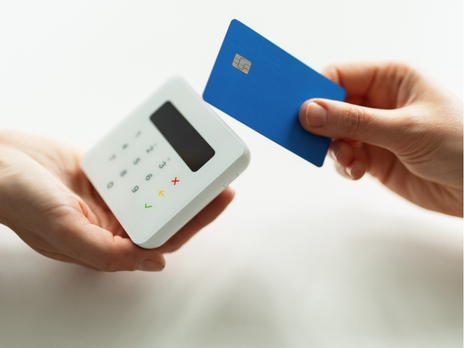
SEPA card payments
SEPA card payments enable fast and secure payments by bank card and debit card. SEPA card payments work both at home and in any other SEPA country. Card payments are debited from your account immediately. When making card payments in non-EU countries, e.g. Switzerland, fees may apply.
With your debit card, you can also withdraw cash from ATMs throughout the SEPA region.
Pay safely!
See below for useful tips for making secure payments.
IBAN is short for International Bank Account Number. It identifies specific bank accounts during domestic and cross-border money transfers. The length and structure of IBANs vary from country to country. IBANs can have up to 34 characters. All Austrian IBANs have 20 characters.
The IBAN is all you need to make credit transfers and direct debits within the euro area, the EU or the European Economic Area (EEA).
For further information on the IBAN, see here.
BIC is short for Business Identifier Code. It is a unique code used to identify banks worldwide. It has 8 or 11 characters (numbers and letters). The first four characters represent a specific bank, the following two stand for the country and the last two for the town in which the bank is located. A three-character industry code may follow after that. For instance, the OeNB’s BIC is “NABAATWW”.
You can find your own bank’s BIC on your bank statements or in your mobile banking app.
For credit transfers or direct debits to payees in a SEPA country outside the EEA or in a country outside SEPA, you will need the BIC of the payee s’ bank in addition to their IBAN. The BIC should be stated on the respective invoice.
The BIC is also called “SWIFT code” in reference to SWIFT, the international financial network that developed the BIC and manages it.
For further information on the BIC, see here.
If you have accidentally transferred money to the wrong payee, please contact your bank immediately – either by telephone or in person at a branch.
- If the transaction has not yet been settled, your bank will normally be able to cancel it without any problems and you will get your money back. This applies, in particular, to standard SEPA credit transfers.
- With SEPA instant credit transfers, the money is immediately debited from your account and credited to the payee’s account. After that, the transaction can no longer be cancelled, and the bank will no longer be able to credit the money back to your account.
- If the payee has already recieved the payment, you can ask your bank to recover the payment to the best of their ability. It is the bank’s duty to provide support, but it cannot guarantee success.
To prevent incorrect transfers or fraud, your bank must carry out an IBAN-name check before every euro credit transfer. In other words, it automatically checks whether the payee’s name matches the IBAN provided, and it informs you about the result of this check.
If your bank fails to carry out the IBAN-name check, or carries it out incorrectly, and this results in an incorrect transfer, you are entitled to compensation.
For further information on the IBAN-name check (verification of payee), see here.
For SEPA instant credit transfers, you can use the same options your bank offers for standard SEPA credit transfers. This means you can, for example, submit SEPA instant credit transfers
- via online banking
- via e-banking apps
- at self-service terminals
- at bank counters
For further information on SEPA instant credit transfers, see here.
Banks and payment service providers may set internal limits for euro transfers (e.g. as a default setting) in order to minimise risks and prevent fraud. These limits must be the same for SEPA credit transfers and SEPA instant credit transfers.
Customers also have the option of setting their own maximum limits – either per transfer or per day. These limits may be higher than any default settings.
For further information on SEPA instant credit transfers, see here.
SEPA instant credit transfers can be made to all countries within the SEPA region.
SEPA comprises all 27 EU member states, 3 EEA countries (Iceland, Liechtenstein, Norway) as well as Albania, Andorra, Moldova, Monaco, Montenegro, North Macedonia, San Marino, Serbia, Switzerland, the United Kingdom and Vatican City.
Yes. SEPA instant credit transfers can currently only be made in euro.
An IBAN-name check is carried out for every SEPA credit transfer, whether standard or instant credit.
For further information on the IBAN-name check (verification of payee), see here.
Bank sort codes – as used by Austrian and German banks in particular – were replaced in 2014. Instead, banks in the SEPA region now use the IBAN (International Bank Account Number) and the BIC (Bank Identifier Code).
- For credit transfers and direct debits within the euro area or the European Economic Area (EEA), all you need is the IBAN.
- For credit transfers and direct debits to non-EEA SEPA countries, you need both IBAN and BIC.
Even some non-SEPA countries use the IBAN.
