Banking supervision
The OeNB supervises Austrian banks in cooperation with the Financial Market Authority (FMA) and the European Central Bank (ECB). We analyse and examine whether banks comply with the regulatory framework. We also help ensure that banks are prepared for potential crisis situations, for example by requiring them to have appropriate recovery and resolution plans in place. If supervisors identify adverse developments or regulatory breaches at a bank, the FMA or the ECB will take action. This ensures that banks address deficiencies and reduce risks.

Organisation of banking supervision
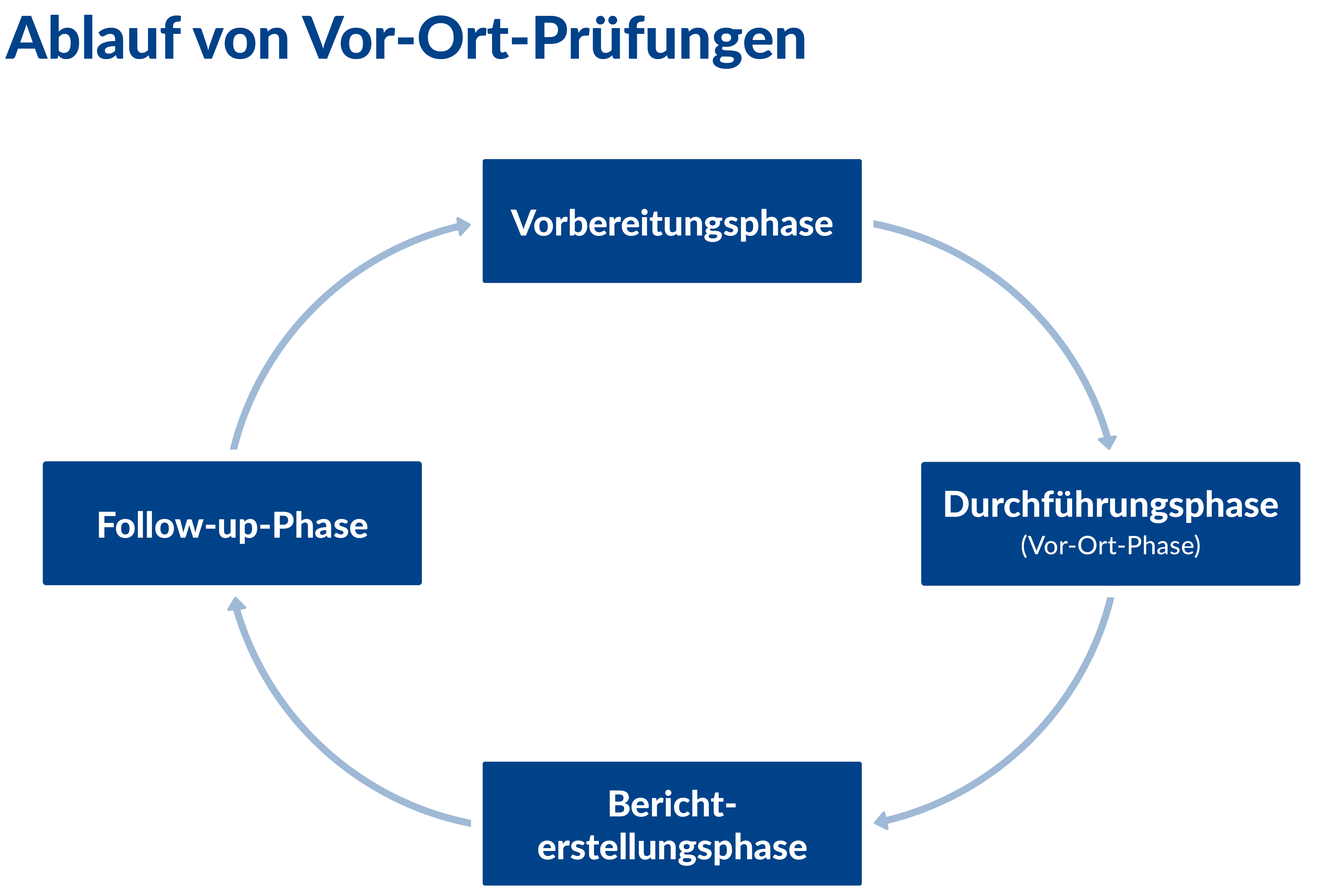
Banking supervision comprises the off-site analysis of banks’ day-to-day operations and on-site inspections to assess banks’ compliance with existing rules and regulations. Breaches will result in supervisory measures taken by the FMA or the ECB. Moreover, supervisors examine whether banks are prepared for potential crisis situations, for example by having in place appropriate recovery and resolution plans. All these are supervisory activities at the individual bank level, which we call microprudential supervision. Supervision that looks at the financial system as a whole in order to address systemic risks is called macroprudential supervision.
In the euro area, the size of a bank determines who is directly responsible for its supervision. The major banks are supervised directly by the ECB, while the smaller banks are supervised by the competent national authorities – in Austria, these are the OeNB and the FMA. This system ensures an efficient division of tasks and responsibilities between the ECB, the FMA and the OeNB.
How are large banks supervised?
In the European supervisory framework, large banks are those which the ECB classifies as significant for financial stability in the euro area because of their size and interconnectedness. The ongoing supervision of these significant institutions (SIs) is usually carried out by Joint Supervisory Teams (JSTs), in which experts from the ECB and the national supervisory authorities work together. As the national supervisory authority, the OeNB plays a key role in the supervision of large Austrian banks. Together with their colleagues from the ECB and other supervisory authorities, OeNB experts work in Joint Supervisory Teams (JSTs). Thanks to their high expertise and in-depth knowledge of the Austrian banking sectors, they contribute substantially to day-to-day supervisory activities and the preparation of supervisory measures. The competent authority for the SIs is the ECB.
How are smaller banks supervised?
Banks with total assets of less than EUR 30 billion are considered small and usually do not have strong international links. In Austria, such small, regional banks account for a comparatively high proportion of the banking sector. In the context of European banking supervision, they are called “less significant institutions” (LSIs). Since these banks do not represent a major risk to the entire euro area, they are not supervised directly by the ECB but by the national competent authorities (NCAs). In Austria, the NCAs are the FMA and the OeNB. The OeNB analyses banks’ risks, carries out on-site inspections, assesses business models and produces expert opinions and reports. The FMA is the competent authority and takes official supervisory action; for example, it issues legally binding decisions.

Related links
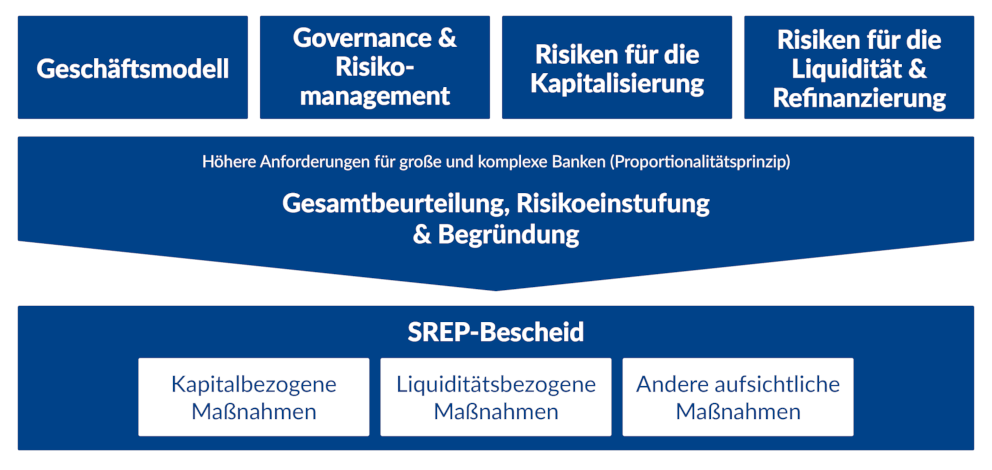
- SSM: The Supervisory Review and Evaluation Process (SREP)
- EBA: Guidelines for common procedures and methodologies for the supervisory review and evaluation process (SREP) and supervisory stress testing
- LSI SREP: Überblick zu den Ergebnissen des SREP 2023 bei weniger bedeutenden Instituten (LSI) (PDF, 414 KB)
- LSI SREP: Überblick zum SREP inkl. methodischer Aspekte bei weniger bedeutenden Instituten (LSI) (PDF, 973 KB)